 +61 9555 7955
Get Ahead of Psychosocial Risk: Start With Your Leaders
You’ve built the policies, processes and reporting pathways, but psychosocial hazards still show up where it matters most: in how leaders respond under pressure, handle conflict, and support people through uncertainty. If you can’t measure these behaviours, you can’t measure the risk.
Emotional Intelligence (EI) changes that. It gives you a practical way to understand (and influence) those behaviours — and with the right tool, you can measure EI and use it as a lead indicator of psychosocial risk.
The EQ-i 2.0 Emotional Intelligence assessment is the only EI tool that measures emotional AND social functioning and does it in such a way that you can map the capabilities to the common Psychosocial Hazards.

The Gap in Most Psychosocial Risk Frameworks
Australia’s model WHS guidance makes it clear that PCBUs must manage psychosocial hazards using a risk management approach.
What many organisations miss is this:
The quality of leadership behaviour is one of the strongest drivers of psychosocial risk
Leaders shape the environment where hazards either escalate or de-escalate:
- How they handle workload pressure determines whether stress becomes distress
- How they respond to conflict influences whether issues are resolved or compounded
- How they communicate affects whether other people feel supported or abandoned
- How they show up daily signals whether speaking up is safe or risky
If you can’t see leadership behaviour clearly, you can’t treat it as a risk factor.
How Emotional Intelligence Strengthens Psychosocial Safety
Emotional Intelligence is a set of emotional and social skills that influence how we:
- perceive and express ourselves
- develop and maintain relationships
- cope with challenges
- use emotional information effectively
In psychosocial safety terms, these capabilities help leaders:
- notice early warning signs (stress, withdrawal, conflict patterns)
- respond calmly under pressure (instead of escalating situations)
- hold respectful conversations (even when emotions run high)
- create trust through consistency and fairness
This aligns with global guidance on managing psychosocial risk within OH&S management systems (e.g., ISO 45003 as a companion to ISO 45001).
The difference with EI is that you can measure these capabilities. And what gets measured gets managed.
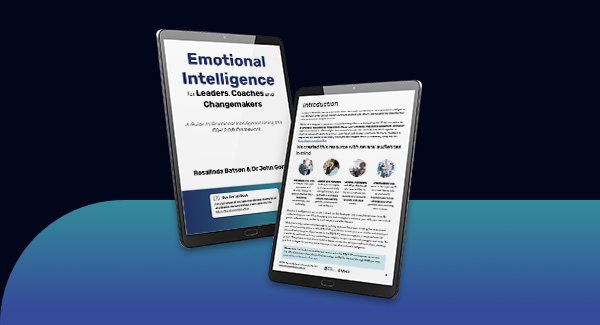
Emotional Intelligence & Psychosocial Hazards (White Paper)
Are you building or uplifting your psychosocial risk approach? This white paper shows how EI can be positioned as a proactive control measure and mapped to common hazards (job demands, poor support, role clarity, change, conflict, bullying, harassment, and more).
Imagine This Instead
Imagine walking into your next executive meeting with data that shows:
- Where leadership capability strengthens your psychosocial controls
- Which specific EI gaps are increasing exposure in high-risk areas
- Exactly where targeted development can prevent incidents before they happen.
You're not just talking about "awareness" or "culture." You're presenting measurable capability, accountable development plans, and a clear line of sight between leadership behaviour and psychosocial risk reduction.
That's what EI measurement makes possible.
How to Turn EI Data into Actionable Risk Controls
Step 1: Identify your dominant psychosocial hazards
Use your incident data, complaint themes, survey results, psychosocial assessments, and consultation to pinpoint where risk concentrates.
Step 2: Identify the EI capabilities that buffer those hazards
Utilise our white paper and EQ-i 2.0 Mapping document to identify specific EI capabilities that help reduce the likelihood and severity of common hazards.
Step 3: Measure EI to inform risk controls and leadership development
Leaders and/or team members complete the EQ-i 2.0 Emotional Intelligence Assessment so you can target development, coaching, and system interventions with far more precision.
Example: Where workload pressure + change is high, leaders with stronger:
+ Stress Tolerance (staying steady and functional under pressure)
+ Flexibility (adapting approach as a situation changes)
+ Reality Testing (reading a situation accurately rather than reacting to assumptions)
are better equipped to respond early, communicate clearly, and prevent avoidable escalation.

Why WHS Professionals Are Getting Certified in EQ-i 2.0
Most psychosocial risk work focuses on systems and symptoms. EQ-i 2.0 certification gives you a way to measure a major risk variable that often remains invisible: the emotional intelligence capability of your leaders.
- You get behavioural data, not just impressions. EQ-i 2.0 is designed to assess EI-related behaviour and functioning, giving you data you can actually work with.
- You spot risk before it becomes harm. Use EI results as a lead indicator of psychosocial risk — a signal that shows where leadership patterns may be increasing exposure, ahead of an incident.
- You target your development spend where is matters. Focus coaching and leadership interventions on the specific EI capabilities that matter most for your risk profile.
- You give your leaders a shared language for psychologically safer leadership. EI gives leaders practical “what to do instead” behaviours.

After certification, you'll be able to...

Administer EQ-i 2.0 assessments confidently and understand what the results mean in real workplace terms.

Translate EQ-i 2.0 results into action: targeted development plans, coaching priorities, and leadership practices that reduce psychosocial exposure.

Debrief leaders and teams in a way that links directly to psychosocial risk patterns (stress, conflict, communication, change).

Use data to inform risk conversations with executives—moving beyond “awareness” into measurable capability and accountable improvement.
What the Certification Includes

EQ-i 2.0 Assessment
Complete the EQ-i 2.0 for yourself and receive a 1-hr debrief with a qualified coach

Online Pre-Work
Approximately 2-hours of self-paced online learning covering the key components of the tool.

Virtual Workshop
2-days of highly interactive learning sessions with an EQ Master Trainer

Exam
We will make sure you have all the knowledge you need to pass the exam.

WHS lens
We show you how to interpret EQ-i 2.0 results through a psychosocial safety lens - so the data becomes usable in leadership risk conversations and capability planning.
Want to Use EI Data to Strengthen Psychosocial Risk Prevention?
If you’re responsible for psychosocial risk and you’ve been looking for a way to make the “human side” measurable, EQ-i 2.0 certification gives you a proven toolset to:
- measure EI
- identify risk patterns
- target development
- reduce psychosocial exposure.
Frequently Asked Questions About Emotional Intelligence & Psychosocial Hazards
Yes. EI measurement can complement both by strengthening the behavioural side of prevention.
No. Our program is designed to build practical confidence in administration and debriefing, with clear guidance for real workplace scenarios.
WHS needs more than generic wellbeing initiatives. EI measurement provides evidence-based insight into leadership behaviour patterns.
Yes. Psychosocial hazards are influenced by job design and systems and by relational/behavioural dynamics.
Blog Posts About EI and Psychosocial Safety

Something I've noticed recently is how freely the word burnout seems to get applied to almost any experience of work that has stopped feeling good. If someone is exhausted, disengaged, or simply going through the motions, people tend to reach for the burnout explanation very quickly. That's understandable, because burnout is a real and serious condition and many of us have seen what it looks like up close.

Ask most people which employees get sent on emotional intelligence training and the answer is usually senior leaders, high-potential managers, and aspiring leaders. In other words, the people whose jobs are obviously about relationships.
It's an assumption so embedded in how organisations approach learning and development that it doesn’t often get questioned, but a growing body of research - including a significant new meta-analysis published in BMC Psychology this year - suggests it's time we did.

Think about the leader you'd want coaching you through a challenging period. It would probably be someone who could sit with you in a difficult conversation without passing judgement and without trying to offer ‘fixes’. They would likely be the one that built and maintained trust with you because you could tell they were paying attention, and because they asked thoughtful questions, balancing high support with constructive challenge.

The numbers are pretty confronting. According to DDI’s Global Leadership Forecast 2025, 71% of leaders are currently experiencing elevated stress and 40% of those are actively considering leaving their roles as a result. That means leadership pipelines are thinning at exactly the moment organisations need them most.

You can’t manage what you can’t measure — and that includes emotional intelligence.
Most leaders recognise that emotional intelligence (EI) is fundamental to success. It shapes how they communicate, make decisions, manage stress, and build trust. Their commitment to developing these skills gets them started — but knowing how to measure growth, and whether their efforts are truly making a difference, is often less clear.