 +61 9555 7955
The Missing Link Between Emotionally Intelligent Leadership and Workplace Safety

In most organisations, safety and leadership development live in completely separate worlds. Safety sits in WHS, governed by legislation, managed through systems and procedures, measured by incident rates and near-miss reports. Leadership development sits in HR or L&D, governed by capability frameworks, delivered through programs and coaching, measured by engagement scores and performance outcomes.
They have different budgets, different owners, and different languages. In many organisations, the people responsible for each domain barely interact.
This separation is costing organisations, because the research is increasingly clear that these two domains are not as distinct as the org chart suggests and that the missing link between them is emotional intelligence.
The Conventional View of Safety Leadership
When organisations talk about safety leadership, they typically mean a recognisable set of things: visible commitment from senior leaders, rigorous systems and procedures, regular safety walks and toolbox talks, clear accountability for compliance, and a culture where safety is stated as a priority.
All of these things matter. None of them are wrong. But they share a common assumption - that if the system is right, the behaviour will follow. That if you build a sufficiently robust framework and communicate it clearly enough, people will act accordingly.
The research tells a more complicated story. Because the variable that most consistently predicts whether people actually behave safely - whether they follow procedures when nobody's watching, whether they report hazards before they become incidents, whether they speak up when something feels wrong - isn't the quality of the system. It's the quality of the relationships within which that system operates. And those relationships are shaped, above almost everything else, by the emotional and social functioning of the people leading them.
What the Research Actually Shows
The connection between emotional intelligence and safety outcomes is better evidenced than many people realise.
A 2023 peer-reviewed study published in Scientific Reports examined 699 workers in Ghana's oil and gas sector - a high-risk environment where the consequences of safety failures are immediate and serious. The researchers found that emotional intelligence significantly mediated the relationship between safety management systems and actual safety performance. In other words, EI didn't just predict how people felt about safety, it predicted how effectively safety systems translated into safe behaviour. The same system, operating in a high-EI environment, produced meaningfully better outcomes than in a low-EI one.
A separate study of container terminal workers found that higher EI reduced the impact of job stress on safety behaviour, and that the effect was larger on safety participation than on safety compliance. This distinction matters enormously, and we'll come back to it.
In healthcare, researchers have proposed and tested a model in which EI acts as a mediating factor between communication quality and patient safety outcomes, with some researchers describing EI as one of the most significant drivers of safety in clinical environments. The mechanism is consistent across contexts: emotionally intelligent people communicate more honestly, flag concerns more readily, and create the conditions where others do the same.
MHS, the publisher of the EQ-i 2.0, one of the world's most widely used and researched emotional intelligence assessments, has also documented the relationship between EI and safety behaviour, noting that individuals with higher EI scores are less likely to engage in unsafe work practices and more likely to actively contribute to safety culture.
Across all of these studies, the mechanism is the same. It isn't complicated once you see it.
Compliance Versus Participation and Why the Distinction Matters
Safety research distinguishes between two fundamentally different types of safety behaviour, and understanding the difference is key to understanding why EI matters so much in this space.
Safety compliance refers to following established rules, procedures, and requirements, e.g. wearing PPE, completing a checklist, adhering to a protocol. Compliance can, to a significant degree, be mandated. You can require it, monitor it, and enforce consequences for not doing it.
Safety participation is something different. It refers to the discretionary behaviours that go beyond the minimum, for example reporting near misses before they become incidents, speaking up when a process feels unsafe, looking out for colleagues, or actively contributing to a culture of safety rather than simply not violating it. Participation cannot be mandated. It requires something that compliance doesn't: the willingness to go beyond what's required, in the service of something larger than oneself.
And that willingness - that discretionary effort - is almost entirely a function of trust. People participate actively in safety when they trust that raising a concern will be taken seriously rather than dismissed, when they believe that flagging a near miss will be treated as valuable rather than used as evidence of their incompetence, when the relationship with their leader is honest enough that they'll say what they actually observe rather than what they think is safe to say.
Emotional intelligence is the variable that most reliably determines whether that trust exists.
What This Looks Like in Practice
The research is compelling. But it's also worth making this concrete, because the dynamics it describes are recognisable to anyone who has spent time in real organisations.
Consider the team that consistently under-reports near misses. On paper, their safety record looks good, but in reality, people have learned through experience that reporting a near miss creates more friction than the event itself. Someone gets questioned. Someone's judgment gets scrutinised. The informal message, transmitted through the way leadership responds to those reports, is that flagging problems is riskier than staying quiet. So, people stay quiet and the hazards that should be caught early aren't caught until they become something that can't be ignored.
Or consider the worker who notices that a process feels unsafe and who has a genuine concern, formed through direct experience, that something isn't right. Whether they raise that concern depends almost entirely on their assessment of what will happen if they do. Have they watched others raise concerns and been taken seriously? Or have they watched concerns get dismissed, minimised, or - worst of all - quietly held against the person who raised them? That assessment, made in a moment, is based on everything they've observed about the emotional intelligence of the leadership around them.
Or consider the leader whose stress and emotional volatility means that their team carefully filters what they tell them. Bad news gets softened and problems get managed before they reach them. The leader believes they have good visibility of what's happening when they are, in fact, the last to know. Not because people are being deceptive, but because the emotional environment that they've created has taught people that honesty carries a cost.
These are not outlaying cases. They are the ordinary texture of environments where psychological safety is low and EI in leadership is underdeveloped. They represent safety risk - sometimes physical, always psychological.
The Physical and Psychological Safety Connection
Australia's psychosocial hazard framework asks organisations to treat psychological safety with the same rigour as physical safety. For many organisations, this has felt like a new and separate obligation; something to be managed alongside existing WHS responsibilities rather than integrated with them.
But the research suggests the two cannot be cleanly separated. An environment in which people don't feel safe to speak up, where leadership behaviour creates chronic stress or uncertainty, or where concerns go unheard produces worse physical safety outcomes. Not as a theoretical proposition, but as a measured, documented relationship.
The implication is significant. Investing in psychologically safe leadership isn't just a response to the psychosocial hazard framework. It is a safety investment in the fullest sense. One with implications for the physical wellbeing of the workforce, not just the psychological.
And the vehicle for creating that psychological safety is, consistently and across contexts, the emotional intelligence of the people in leadership roles.
What Organisations Can Do
If the connection between EI and safety outcomes is as well evidenced as the research suggests, the practical question is what organisations should do with that information. Three things seem most important.
The first is to start asking different questions about safety culture. Most safety culture assessments focus on systems, procedures, and compliance rates. Fewer ask the question that the research suggests is most predictive: do people feel safe enough to tell the truth here? Do they believe that raising a concern will be taken seriously? Do they trust the people leading them enough to speak up before something becomes a crisis? The gap between the system-focused question and the trust-focused question is where a significant amount of safety risk lives.
The second is to treat leadership behaviour as a safety variable - formally, not just culturally. This means including EI-related capacities in what's assessed, developed, and held accountable in leaders, as a core component of safety leadership. Self-awareness, empathy, emotional self-awareness, and the ability to create conditions where honesty is possible are not soft skills sitting alongside safety competency. They are safety competencies. Organisations that treat them as such make a fundamentally different investment in safety than those that don't.
The third is to deliberately bridge the gap between WHS and leadership development. In many organisations, these two functions can be working on adjacent parts of the same problem without knowing it. Creating structured connection between them through shared frameworks, joint initiatives, and common language around what psychologically safe leadership looks like and why it matters for safety outcomes is one of the higher-leverage organisational changes available. It doesn't require a large investment, just a decision to stop treating two related problems as if they were entirely separate ones.
A Final Thought
The case for emotionally intelligent leadership has historically been made on human grounds i.e. it's better for people, it creates healthier cultures, it's the right thing to do. All of that is true, and it matters.
But the safety research adds a dimension to that case that is harder to dismiss, and that speaks to audiences who are not primarily moved by the human argument. Emotionally intelligent leadership produces measurably safer workplaces. Not just psychologically safer - though it does that - but safer in the fullest sense of the word.
The organisations that understand this connection are making a more complete investment in safety than those that treat leadership development and WHS as separate domains with separate owners and separate goals.
They're also, it turns out, building the kind of workplaces where people are willing to tell the truth. And in safety, as in so much else, that's where everything starts.
Want To Explore This Further?
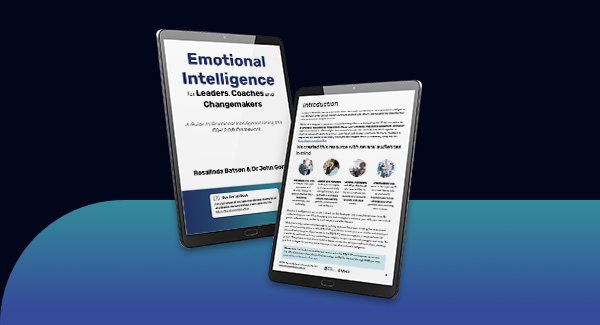
Our whitepaper — Emotional Intelligence & Psychosocial Hazards — explores the research connecting EI leadership behaviour to psychological safety and workplace outcomes in depth. It's a practical resource for HR professionals, WHS teams, and leaders who want to understand the evidence and what it means for their organisation.
→ Download the Whitepaper — Emotional Intelligence & Psychosocial Hazards
If you work with leaders and organisations on safety culture, leadership development, or psychosocial risk — and you'd like a rigorous, evidence-based tool for doing that work — find out more about our EQ-i 2.0 certification.
→ Find out more about EQ-i 2.0 Certification
Or if you'd like to talk about what this could look like for your organisation specifically, I'd love to hear from you.
References
Kwame Edmund, N.N., Suxia, L., Kachie, A.D.T., & Ebenezer, L. (2023). Emotional intelligence as a conduit for improved occupational health safety environment in the oil and gas sector. Scientific Reports, 13.
doi.org/10.1038/s41598-023-46886-3
Lu, C.-S., & Kuo, S.-Y. (2016). The effect of job stress on self-reported safety behaviour in container terminal operations: The moderating role of emotional intelligence. Transportation Research Part F: Traffic Psychology and Behaviour, 37, 10–26.
Minton-Eversole, T. (2016). A model for the role of emotional intelligence in patient safety. PMC / National Institutes of Health.
Available at: pmc.ncbi.nlm.nih.gov/articles/PMC5123476
Shaw, J. (2024). How emotionally intelligent leaders drive safety performance. MHS Blog.
Available at: mhs.com/blog/how-emotionally-intelligent-leaders-drive-safety-performance
Edmondson, A. C. (1999). Psychological safety and learning behavior in work teams. Administrative Science Quarterly, 44(2), 350–383.
Safe Work Australia (2023). Managing psychosocial hazards at work. Available at: safeworkaustralia.gov.au
Comcare (2024). Psychosocial hazards. Australian Government. Available at: comcare.gov.au/safe-healthy-work/prevent-harm/psychosocial-hazards
Sign up for the Neural Networks Newsletter
Join our mailing list to receive information on leadership, sales, and emotional intelligence.