 +61 9555 7955
Everyone saw it. Nobody said anything. Sound familiar?

Picture a leadership team. Experienced, capable people who have worked together long enough to know each other well. And somewhere in that team, there is a person — talented, possibly high-performing — whose behaviour is causing harm. It might be a communication style that leaves people shaken after difficult conversations, or a habit of undermining colleagues in front of other people. It is a pattern of conduct that, if you described it plainly to anyone outside the room, they would immediately recognise as a problem.
Everyone on the leadership team knows - some of them have known for years. They talk about it, but quietly, with each other, away from the person in question. They shake their heads, empathise with the people being affected and then they go back into the room, and nothing changes.
This is the bystander problem. And in our experience, it is one of the most common — and most costly — dynamics in senior teams.
The silence of a leadership team is not neutral. It is a decision. And the people being harmed can see it clearly.
Where the bystander effect comes from
The psychology behind bystander behaviour was first studied in the aftermath of the 1964 murder of Kitty Genovese in New York, where numerous witnesses reportedly failed to intervene or call for help. Researchers John Darley and Bibb Latané set out to understand why, and what they found was both surprising and uncomfortable: the more people who witness a harmful situation, the less likely any individual is to act.
They called it diffusion of responsibility. When we are one of many bystanders, we unconsciously assume that someone else will step in. The moral weight of the situation is distributed across the group, which means each individual carries less of it — and is therefore less likely to act on it. It is a deeply human response. It is also, in the context of a leadership team watching harmful behaviour go unaddressed, an extraordinarily expensive one.
The research has been replicated across decades and contexts. And while most of us associate bystander behaviour with dramatic public situations, Darley and Latané's findings apply just as readily to the quieter, slower-moving harms that unfold in meeting rooms and leadership teams, where the stakes feel lower in any given moment, but compound over time into something significant.
Why leadership teams are especially vulnerable
There are several dynamics that make senior teams particularly prone to bystander behaviour.
The first is hierarchy. Even at the leadership level, power differentials exist and they create a strong social disincentive to name what everyone can see. Challenging a peer, or someone more senior, carries real professional and relational risk. The person who speaks up becomes the one who 'made it a thing' - the one who is difficult, or disloyal, or not a team player. Most people weigh that risk privately and decide it isn't worth it.
The second is the cover provided by high performance. Harmful behaviour in leadership teams is frequently tolerated when the person in question delivers results. Organisations are deeply reluctant to disrupt a high performer, and that reluctance, understandable as it is, creates the conditions in which harm continues indefinitely. The implicit message is that results justify behaviour, which is one of the most damaging things a culture can communicate.
The third is collective rationalisation. When a group of people are all aware of a problem and all choosing not to act, they tend to reinforce each other's inaction through shared minimisation. 'It's not that bad.' 'They're under a lot of pressure.' 'That's just how they are.' 'It would cause more disruption to address it than to leave it.' These narratives circulate quietly among people who are, individually, good human beings and who collectively enable something none of them would endorse if asked directly.
Collective rationalisation allows harm to continue not because people don't care, but because caring feels insufficient against the social weight of staying silent.
And then there is the impact on the person being harmed, which often goes unconsidered in these conversations. For someone who is experiencing harmful behaviour from a colleague, the awareness that others can see what is happening and are choosing not to act compounds the harm significantly. It is not just the behaviour itself that damages trust and psychological safety. It is the silence of the people who witnessed it.
This is a psychosocial hazard
Under Australia's psychosocial hazard framework, poor workplace relationships and inadequate responses to harmful behaviour are explicitly identified as risk factors for psychological injury. The obligation to address psychosocial hazards sits not just with HR, and not just with the most senior person in the room. It sits with every leader who has a duty of care to the people around them.
In practice, that means the bystander dynamic in a leadership team is not just a cultural or interpersonal problem, it’s a safety problem. The diffusion of responsibility that makes inaction feel acceptable does not change the fact that someone is being harmed and that the organisation, through its collective silence, is allowing that harm to continue.
This reframe matters. Not to create fear or liability anxiety, but because it changes the conversation from 'this is uncomfortable and I'd rather not get involved' to 'this is my responsibility and I have a role to play.' That shift - from bystander to responsible actor - is exactly what the psychosocial hazard framework is trying to encourage.
The EI competencies that break the bystander dynamic
Understanding why bystander behaviour happens is useful, but the more important question is what breaks it. What allows an individual in a group of informed, capable people to be the one who acts when everyone else has decided not to?
In our experience working with leaders and teams, the EQ-i 2.0 offers a useful lens here - not just in terms of individual competencies, but in the interplay between them. Because breaking the bystander dynamic rarely requires just one capacity, it requires several, working together and in balance.
The first pairing is Emotional Self-Awareness and Emotional Expression.
Emotional Self-Awareness is the ability to recognise and understand your own feelings - to notice, in the moment, what is actually happening inside you. For a leader watching harmful behaviour unfold in a team or a meeting room, that internal experience is often complex: discomfort, anxiety, a pull toward action alongside an equally strong pull toward self-protection. Without awareness of those feelings, most people simply act on them, which often means staying silent, because silence is the path of least resistance.
But awareness alone isn't enough. This is where Emotional Expression becomes essential. Emotional Expression is the capacity to communicate your feelings constructively - to translate what you're experiencing internally into something that can be said out loud, in a way that opens a conversation rather than closing one down. A leader who is self-aware but unable to express what they're feeling tends to carry the discomfort privately and indefinitely. A leader who has developed both capacities can say, clearly and without aggression: "I want to name something that I think we've been avoiding." That sentence requires both knowing what you're feeling and being willing to give it a voice.
The second pairing is Assertiveness and Empathy.
Assertiveness - the capacity to express thoughts, beliefs, and concerns directly and constructively, even when doing so carries social risk - is the competency most obviously relevant to breaking the bystander dynamic. It is what allows a leader to speak when speaking is uncomfortable, to name what others have decided not to name, and to act in the face of the social pressure that keeps other people silent.
But Assertiveness without Empathy can easily become bluntness, or worse, a kind of moral self-congratulation that damages the very relationships it's trying to protect. The leader who names harmful behaviour in a way that humiliates the person involved, or that positions themselves as the only one with the courage to act, is not creating safety. They're creating a different kind of harm.
Empathy - genuine attunement to the emotional experience of others - is what gives Assertiveness its quality. It is what allows a difficult truth to be delivered in a way that the people in the room can actually receive. It keeps the conversation oriented toward the person being harmed, rather than the discomfort of the person speaking and it creates the conditions in which the response to naming something difficult is not defensiveness or retaliation, but genuine reckoning.
The leader who breaks the bystander dynamic with both Assertiveness and Empathy in play is the one whose intervention actually changes something.
Holding all of this together is Social Responsibility - the willingness to act in the interest of the broader group, not just in one's own. When bystander dynamics take hold, it is almost always because individual self-interest has quietly overwhelmed any sense of collective obligation. Social Responsibility is the counterweight to that drift because it is the internal compass that keeps pointing toward the people being affected, even when looking away would be easier.
The leader who breaks the bystander dynamic is rarely the most senior person in the room. They are the one who has done enough work on themselves to recognise what they're feeling, express it constructively, speak with both honesty and care, and remain oriented toward something larger than their own comfort.
That is not a single skill. It is several, in conversation with each other. And it is entirely learnable.
What organisations can do — beyond individual EI
It would be convenient if bystander behaviour in leadership teams were simply a personal failing - a matter of individual leaders lacking the courage or integrity to act. But it isn’t and treating it that way produces limited results.
Bystander dynamics are enabled by cultures and structures that make speaking up feel unsafe, futile, or professionally costly. Which means addressing them requires work at both the individual and the systemic level.
At the individual level, that means investing in EI development for leaders, not as a one-off training event, but as a sustained process that builds genuine self-awareness, challenges the habits that keep people silent, and creates the internal capacity to act differently under social pressure.
At the systemic level, it means creating structures that reduce the social risk of naming difficult things. Psychological safety at the leadership team level, which is often significantly lower than organisations assume, has to be actively built and maintained. The most senior leader in any team sets the tone and modelling the behaviour of naming uncomfortable truths is one of the most powerful things they can do.
It also means being honest about how performance is evaluated and what is tolerated. If harmful behaviour in high performers consistently goes unaddressed, the message received by everyone watching is clear - and no amount of values statements or psychosocial risk policy will change the culture that message creates.
The cost of looking away
There is a version of this conversation that focuses on the legal and regulatory risk of unaddressed psychosocial hazards and that conversation is legitimate and important. But there’s something we think matters more.
Every leadership team that has looked away from harmful behaviour has paid a price. Sometimes it's visible, in the form of a formal complaint, or a significant resignation, but sometimes it's slower and quieter, through a gradual erosion of trust, or when talented people leave without fully explaining why.
In every case, the people who were harmed knew that others could see what was happening. The silence of the leadership team wasn't invisible to them; it was part of the harm.
Emotional intelligence gives leaders the capacity to be the person who breaks that silence. It may not be done perfectly, or without discomfort, but with enough self-awareness, enough care for others, and enough courage to say the thing that needs saying.
That capacity is learnable. And in the context of the psychosocial hazard framework, it is also - increasingly - expected.
Want to go deeper on this topic?
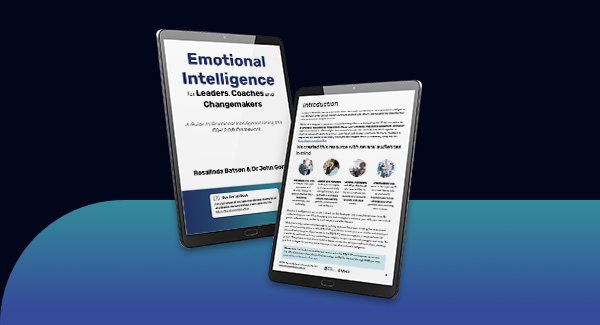
Our whitepaper — Emotional Intelligence & Psychosocial Hazards — explores the connection between EI leadership behaviours and psychosocial risk in depth, including what the research tells us and what organisations can do about it.
Download the Whitepaper — Emotional Intelligence & Psychosocial Hazards
If you're an HR professional, coach, or consultant who works with leadership teams on exactly these dynamics, our EQ-i 2.0 certification gives you a rigorous, evidence-based tool for doing that work.
Find out more about EQ-i 2.0 Certification
Or if you'd like to have a conversation about what this could look like for your organisation specifically, I'd love to hear from you.
References
Darley, J. M., & Latané, B. (1968). Bystander intervention in emergencies: Diffusion of responsibility. Journal of Personality and Social Psychology, 8(4), 377–383.
Edmondson, A. C. (1999). Psychological safety and learning behavior in work teams. Administrative Science Quarterly, 44(2), 350–383.
Latané, B., & Nida, S. (1981). Ten years of research on group size and helping. Psychological Bulletin, 89(2), 308–324.
MHS (2024). EQ-i 2.0 Technical Manual. Multi-Health Systems. Toronto, Canada.
Safe Work Australia (2023). Managing psychosocial hazards at work. safeworkaustralia.gov.au
Sign up for the Neural Networks Newsletter
Join our mailing list to receive information on leadership, sales, and emotional intelligence.