 +61 9555 7955
EQ-i 2.0 vs. MSCEIT: Understanding the Difference Between Two Leading Emotional Intelligence Assessments
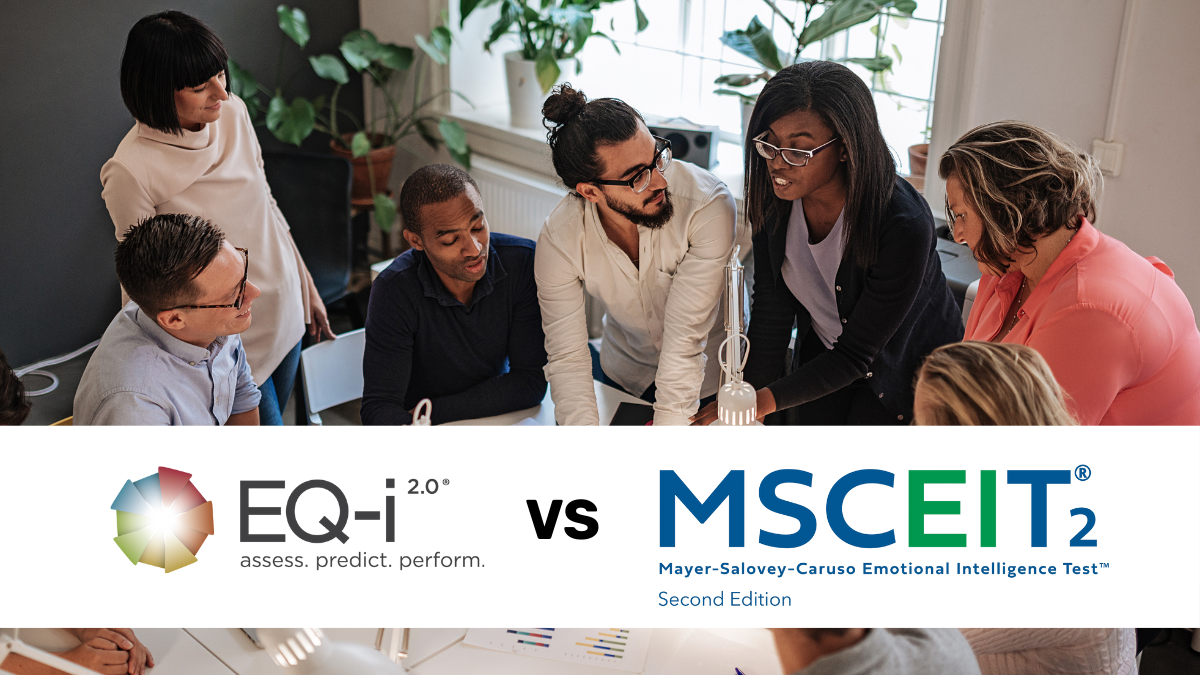
As emotional intelligence (EI) continues to gain recognition as a critical success factor in leadership, recruitment, and team effectiveness, so too has interest in reliable ways to measure it. Two of the most well-known tools for assessing emotional intelligence are the EQ-i 2.0 (Emotional Quotient Inventory 2.0) and the MSCEIT (Mayer-Salovey-Caruso Emotional Intelligence Test).
While both assessments are rooted in the science of emotional intelligence, they differ significantly in how they conceptualise and measure it. Each has unique strengths and understanding these can help you choose the right tool for your needs - whether you're coaching leaders, recruiting for emotionally intelligent talent, or supporting employee development.
The Two Models Behind the Tools
EQ-i 2.0: The Self-Perception Model
The EQ-i 2.0 is based on the Bar-On model of emotional-social intelligence. It views EI as a set of interrelated emotional and social competencies, behaviours, and skills that influence how we understand and express ourselves, develop and maintain relationships, cope with challenges, and use emotional information in effective and meaningful ways.
The EQ-i 2.0 is a self-report assessment, meaning individuals rate their own typical behaviour and preferences across 15 subscales, grouped under five composite areas:
- Self-Perception
- Self-Expression
- Interpersonal
- Decision Making
- Stress Management
MSCEIT: The Ability-Based Model
In contrast, the MSCEIT is based on the ability model developed by Mayer, Salovey, and Caruso. It defines emotional intelligence as a set of mental abilities related to processing and using emotional information. These include the ability to perceive emotions accurately, use emotions to facilitate thinking, understand emotional meaning, and manage emotions effectively.
The MSCEIT is a performance-based assessment. Instead of asking people how they behave, it tests their actual ability to solve emotion-related problems through tasks like identifying emotions in faces, understanding emotional transitions, and evaluating emotional responses.
Comparing the Two Approaches
|
Feature |
MSCEIT |
|
|
Model |
Mixed |
Ability-based |
|
Assessment Type |
Self-report |
Performance-based |
|
Focus |
Measures how people see themselves in emotional and social contexts |
Measures how well people perform emotion-based tasks |
|
Results Reflect |
Perceived behaviour, habits, preferences |
Actual emotional reasoning and problem-solving ability |
|
Use Cases |
Leadership development, coaching, recruitment, team effectiveness, culture transformation |
Selection, research, clinical contexts, benchmarking emotional reasoning ability |
|
Feedback Type |
Practical, behavioural strategies for growth |
Objective, skill-based feedback on emotional problem-solving |
|
360 Multi-Rater Assessment Available |
No |
When to Use the EQ-i 2.0
The EQ-i 2.0 is especially useful in settings where self-awareness and development are key. Because it reflects how individuals perceive and manage emotions in real life, it’s a valuable tool in:
- Leadership and management development programs
- Executive and personal coaching
- Recruitment and onboarding, particularly for leadership or customer-facing roles
- Workplace culture initiatives, where social skills and stress tolerance matter
Its clear, practical language and developmental focus make it a highly accessible tool for feedback conversations, and its structure provides a solid framework for ongoing coaching or performance planning.
When to Use the MSCEIT
The MSCEIT offers an objective measurement of emotional problem-solving skills, making it an excellent choice in situations where actual emotional ability (not just self-perception) needs to be assessed. It’s well-suited to:
- Selection for high-stakes roles, particularly where emotional reasoning under pressure is critical
- Clinical or educational research, where accuracy and standardised measurement are essential
- Baseline measurement of emotional ability for large-scale EI benchmarking initiatives
Because the MSCEIT measures EI as a cognitive ability, it is less influenced by personality, mood, or confidence levels, offering an unbiased lens into a person’s emotional processing skills.
Can You Use Both?
Yes - and in some situations, doing so provides a richer picture of an individual’s emotional intelligence. For example, someone may score high on the MSCEIT (they can identify and manage emotions well) but low on the EQ-i 2.0 (they don’t typically behave in that way or lack confidence in those areas). This mismatch can reveal opportunities for coaching, alignment, or deeper reflection.
Final Thoughts
Both the EQ-i 2.0 and MSCEIT offer valid, reliable ways to explore emotional intelligence—but they tell different stories. The EQ-i 2.0 tells us about habits, behaviours, and self-perceptions, and is particularly effective in developmental, workplace, and coaching contexts. The MSCEIT tells us about emotional reasoning ability, offering insight into how well someone can work with emotions, regardless of whether they actually do so day-to-day.
Choosing the right assessment comes down to your goals:
- Want to improve leadership effectiveness, self-awareness, or team performance? Start with EQ-i 2.0.
- Need to assess emotional reasoning skills for selection or research? MSCEIT is your tool.
Emotional intelligence is complex, and these tools offer powerful ways to make it measurable—and actionable.
Next Steps:
Watch this YouTube video from MHS - 'EQ-i 2.0® & MSCEIT® 2 Compared: Which Emotional Intelligence Assessment Is Right for You?'
Book a discovery call with Ros
Sign up for the Neural Networks Newsletter
Join our mailing list to receive information on leadership, sales, and emotional intelligence.